In a world where everything is in constant flux—arising and passing away—artist Lê Mạnh Hùng, known as Chân Như, poses a seemingly paradoxical question: What can endure beyond the cycle of arising and passing away?
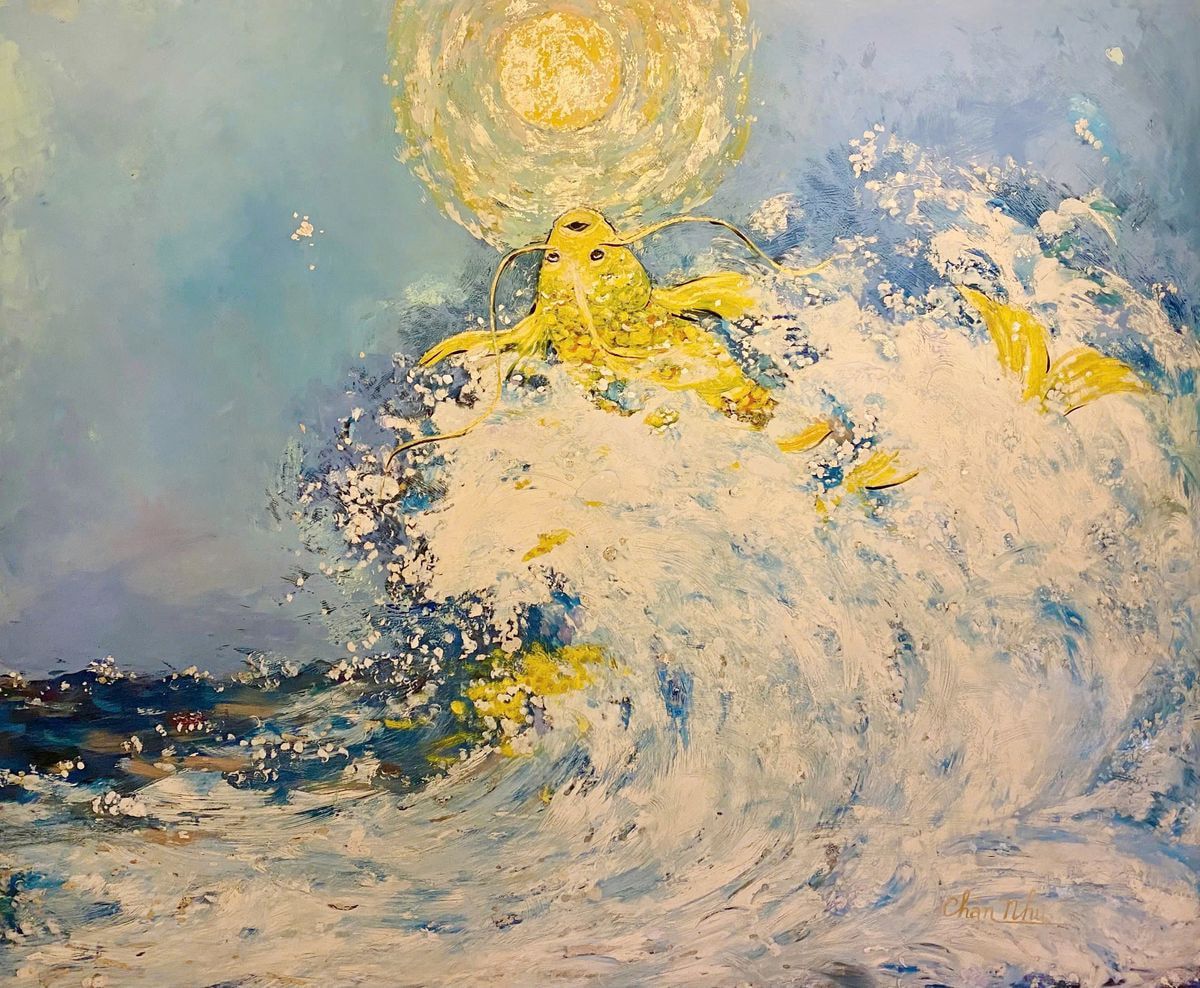
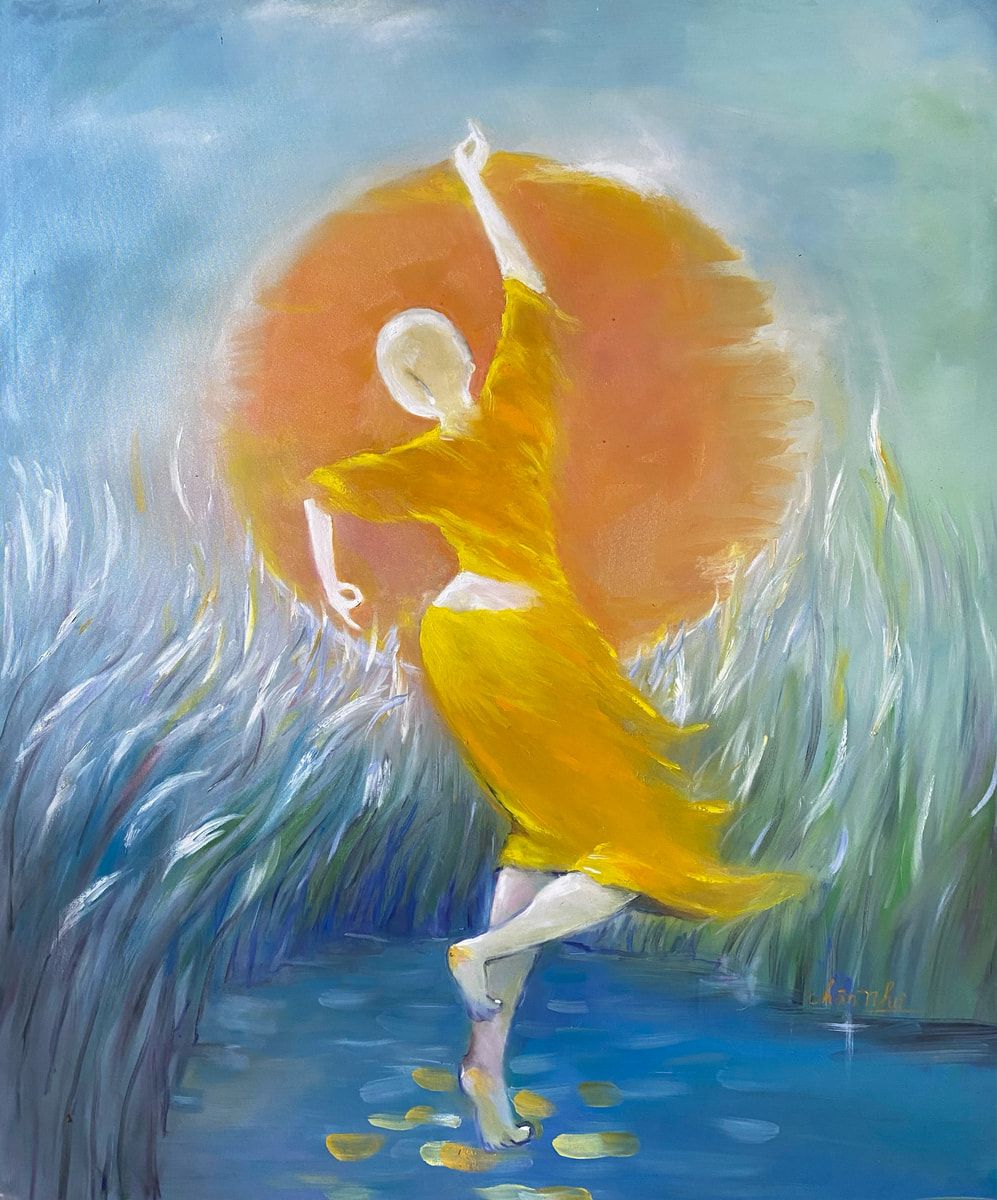
From this question emerged Permanence, a Zen Art Exhibition that takes viewers on an artistic journey beyond the visible. The sun and the moon appear throughout many of the works as images the artist “borrows” to evoke a presence more enduring than time—something that remains even beneath the ceaseless changes of life.
The exhibition presents nearly 50 new Zen paintings by Chân Như in oil and lacquer, alongside works by two of his students who have closely shared in his artistic journey and practice: Định Tâm (Phan Nha Trang) and Lê Hồng Giang.
From Moments to Permanence
If Moments turned our gaze toward what unfolds within a fleeting instant, Permanence seems to ask the question from the opposite direction: “When all these moments are constantly changing, what remains?”
Six years ago, Chân Như held an exhibition entitled Moments. If Moments turned our gaze toward what unfolds within a fleeting instant, Permanence seems to ask the question from the opposite direction: When all these moments are constantly changing, what remains?
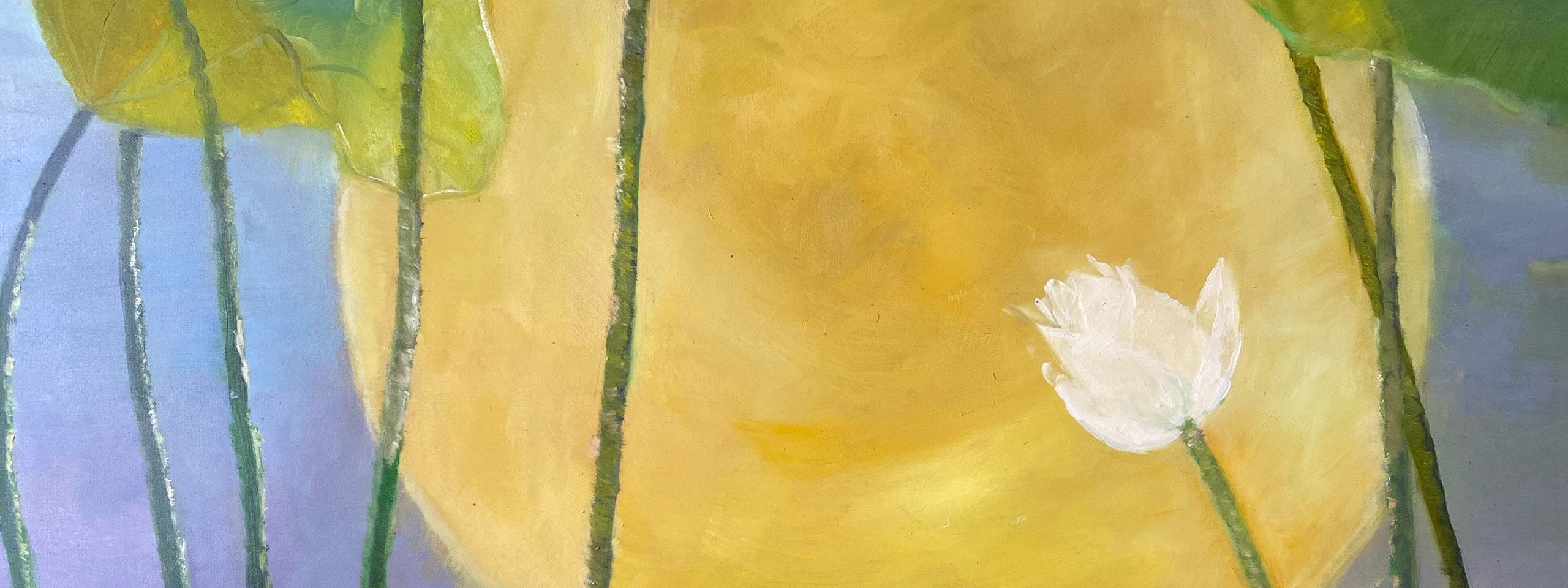
In the works presented at this exhibition, the sun and the moon emerge as important visual symbols. Yet for Chân Như, they are not absolute answers to the idea of permanence. As the artist himself points out, the sun and the moon ultimately remain phenomena within a world of change, decay, and dissolution. He simply “borrows” these enduring images to point toward something beyond the cycle of arising and passing away.
“I borrow these two images to speak of things that never disappear, that can never be destroyed—something that remains permanent even as everything else continues to change, arise, and pass away.”
Behind a world in constant motion, the artist suggests, there may still be something that is “neither born nor destroyed.” This is the philosophical ground of Permanence: rather than searching for the unchanging in outward forms, the exhibition invites viewers to sense another dimension of existence—one in which emotion and inner resonance can be experienced fully in the present moment.
Zen Painting through Emptiness and Clarity: Thangka Reimagined in Vietnamese Lacquer
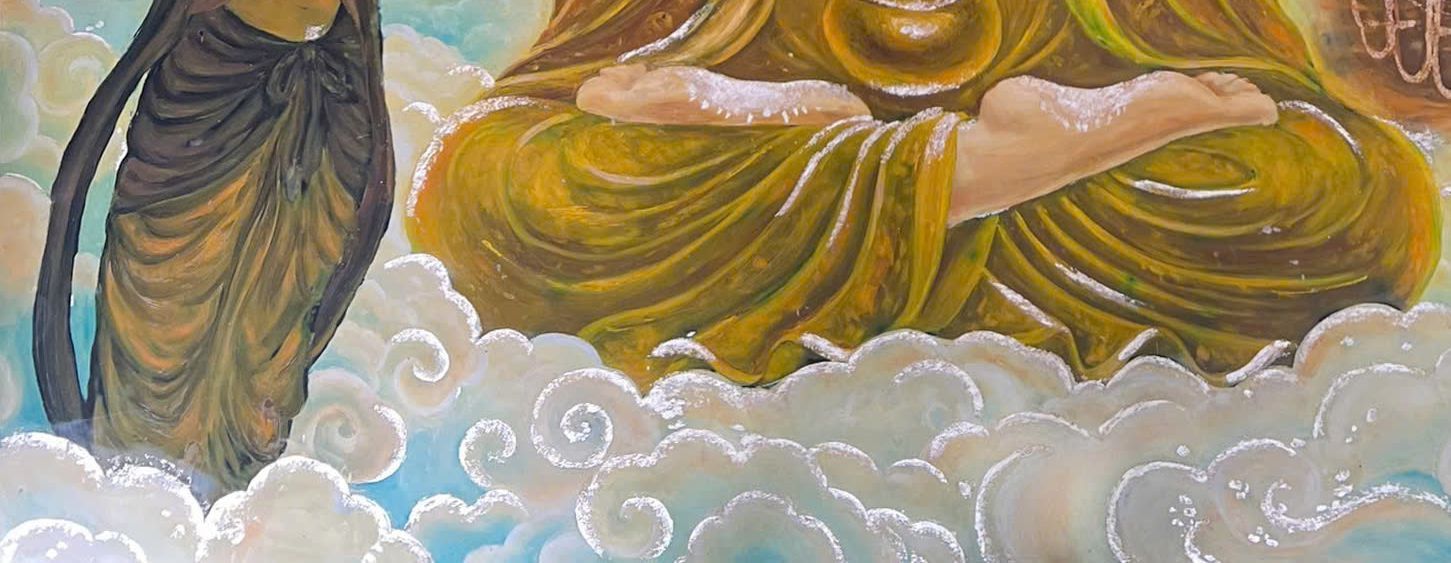
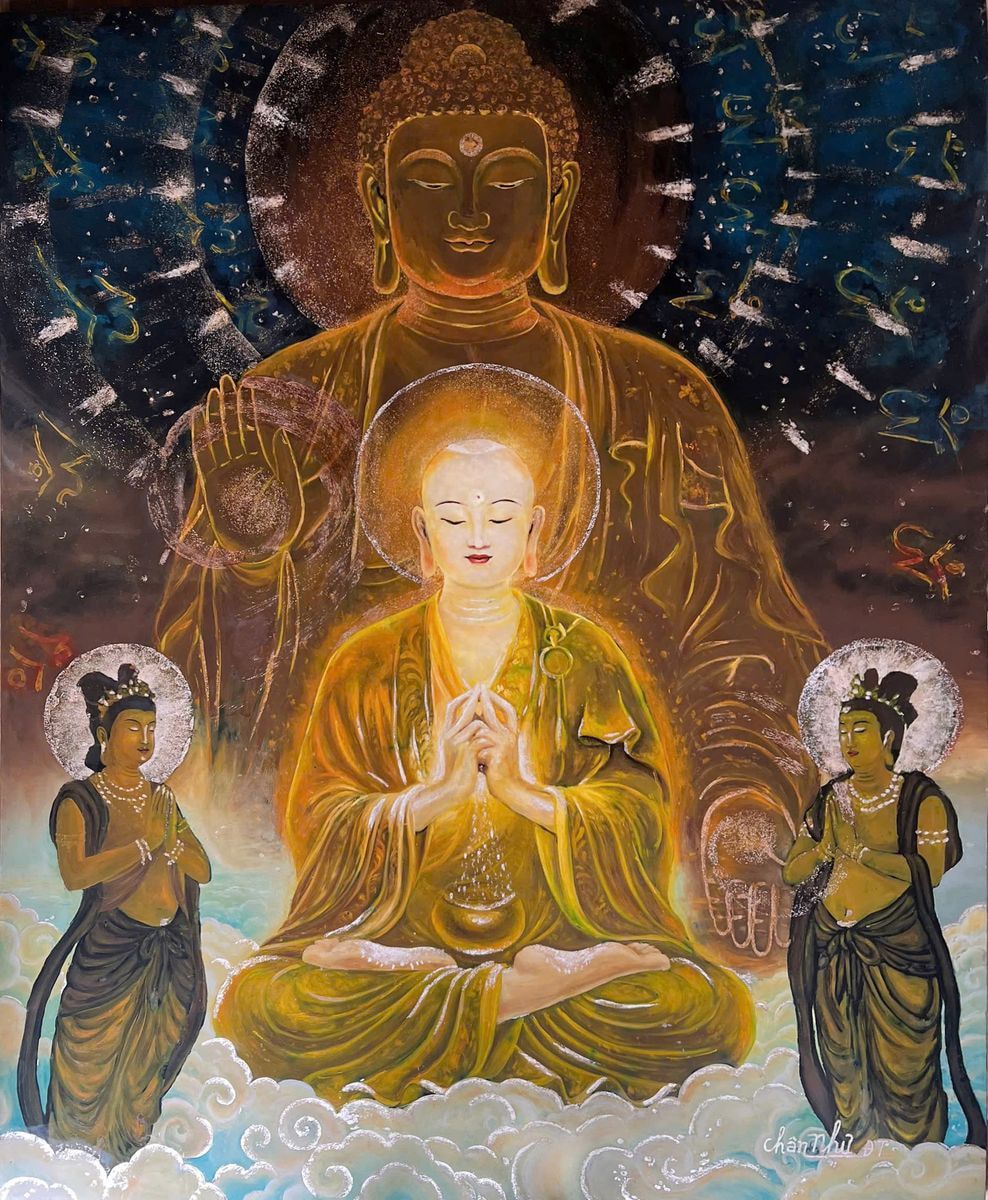
A bold and pioneering step in contemporary art. For the first time, the sacred art of Thangka is interpreted through the traditional medium of Vietnamese lacquer.
One of the most compelling aspects of Chân Như’s practice is his understanding of what Zen painting can be.
While Zen painting is often associated with lotus flowers, temples, or familiar Buddhist imagery, Chân Như extends the idea to embrace the many expressions of everyday life.
For him, the essential question is not what the artist paints, but how the artist sees and receives what is unfolding before him. Chân Như understands Zen as the ability to receive what is present truthfully, with a mind that is “empty, still, and clear.” Zen painting, therefore, need not conform to a prescribed set of images or symbols. When the mind is free from preconceptions and predetermined ideas, the artist can receive life as it appears and express it exactly so.
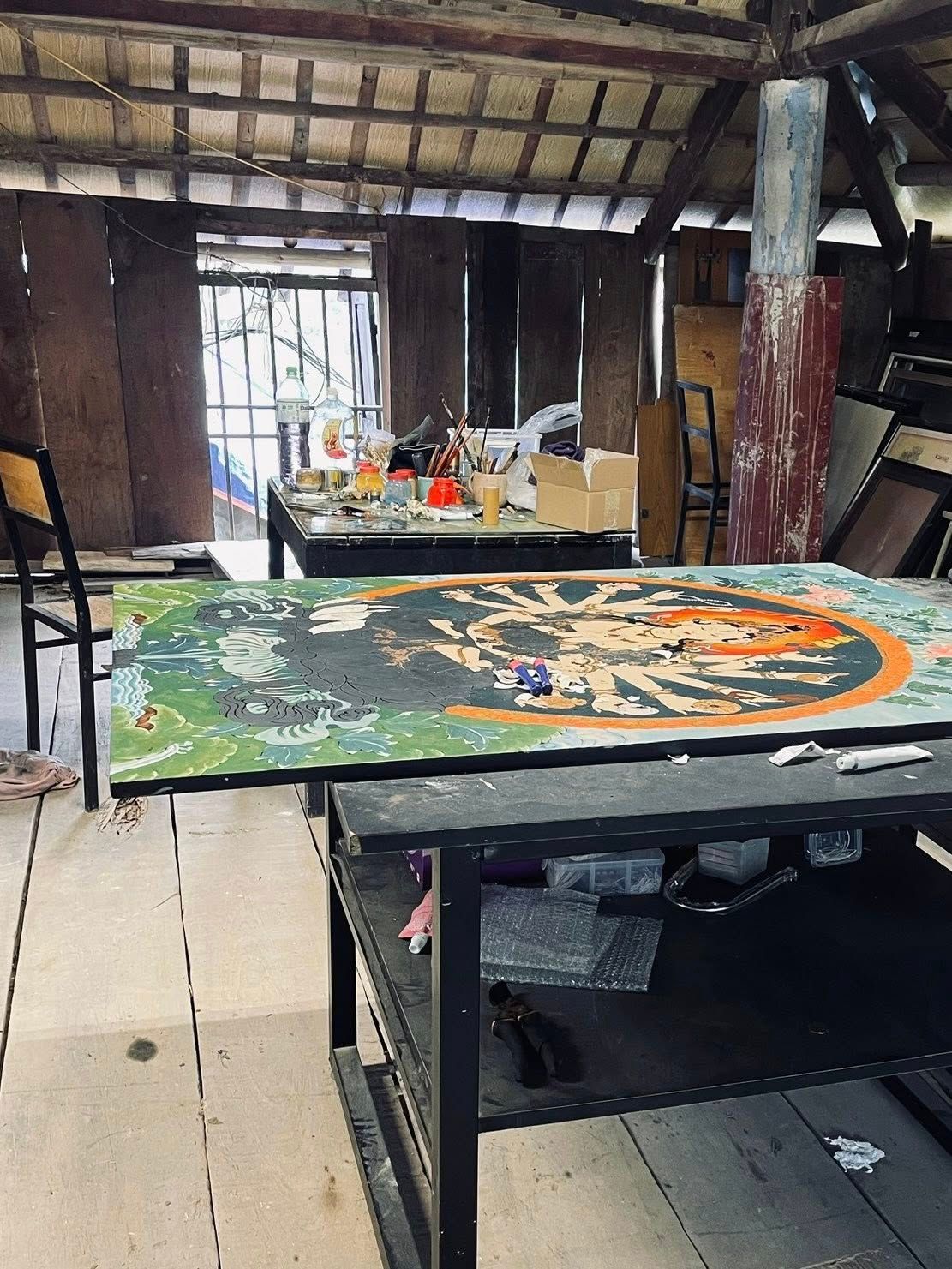
A particularly bold and pioneering aspect of Permanence is the interpretation of sacred Thangka art through the traditional medium of Vietnamese lacquer, created by a Zen artist whose practice has been shaped by many years of deep meditation.
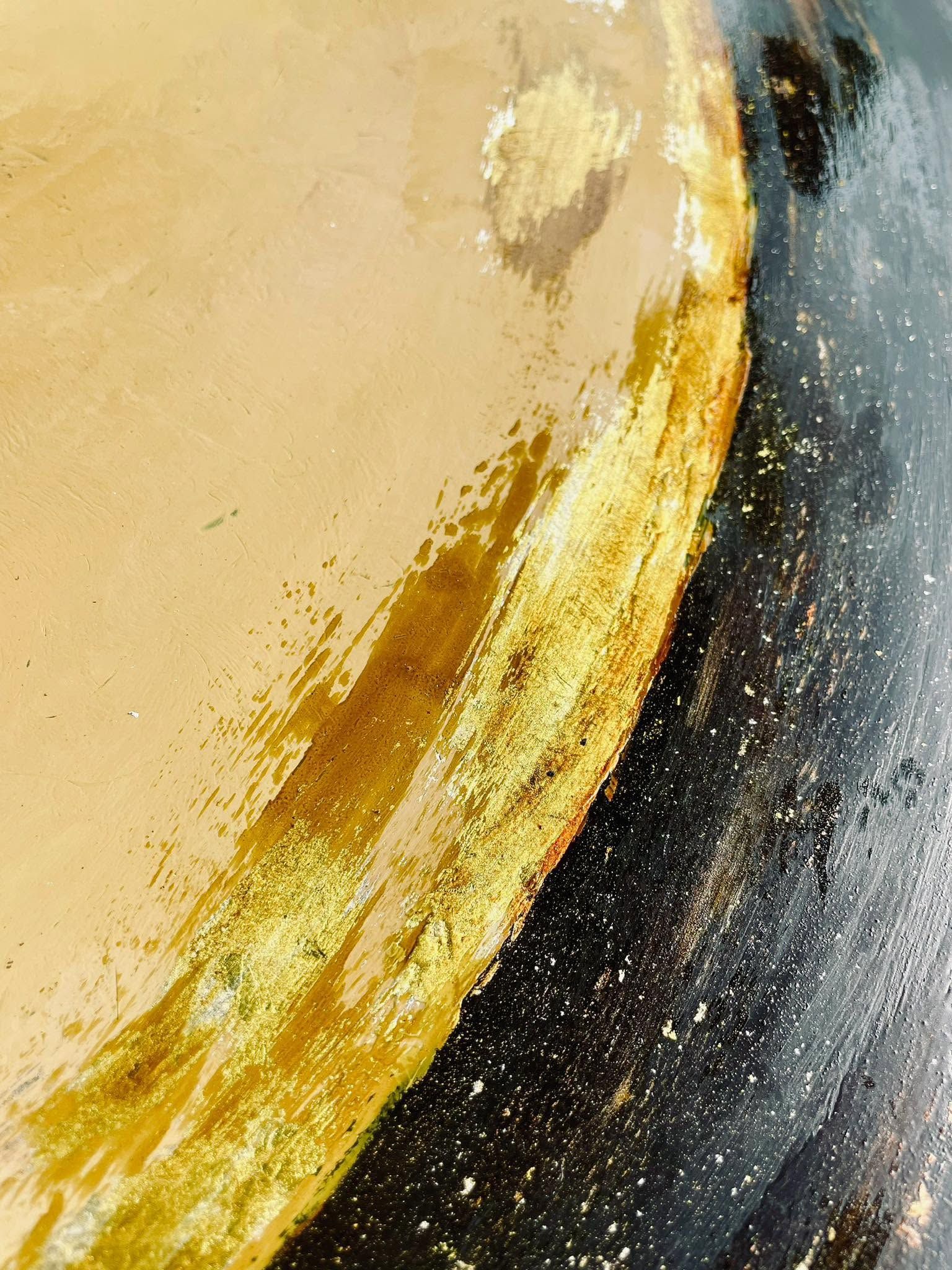
Thangka is a sacred painting tradition that demands precision, discipline, and profound spiritual focus. When brought together with the depth, luminosity, and mysterious qualities of Vietnamese lacquer, each touch of colour and each layer of metallic leaf does more than evoke a sacred visual world: it carries the stillness, meditative energy, and inner experience of the artist.
This is more than an experiment with materials. It is a distinctive encounter between artistic traditions, cultures, and spiritual practice on the surface of Vietnamese lacquer.
Painting Lacquer with Ten Fingertips: A Distinctive Approach to Vietnamese Lacquer Art
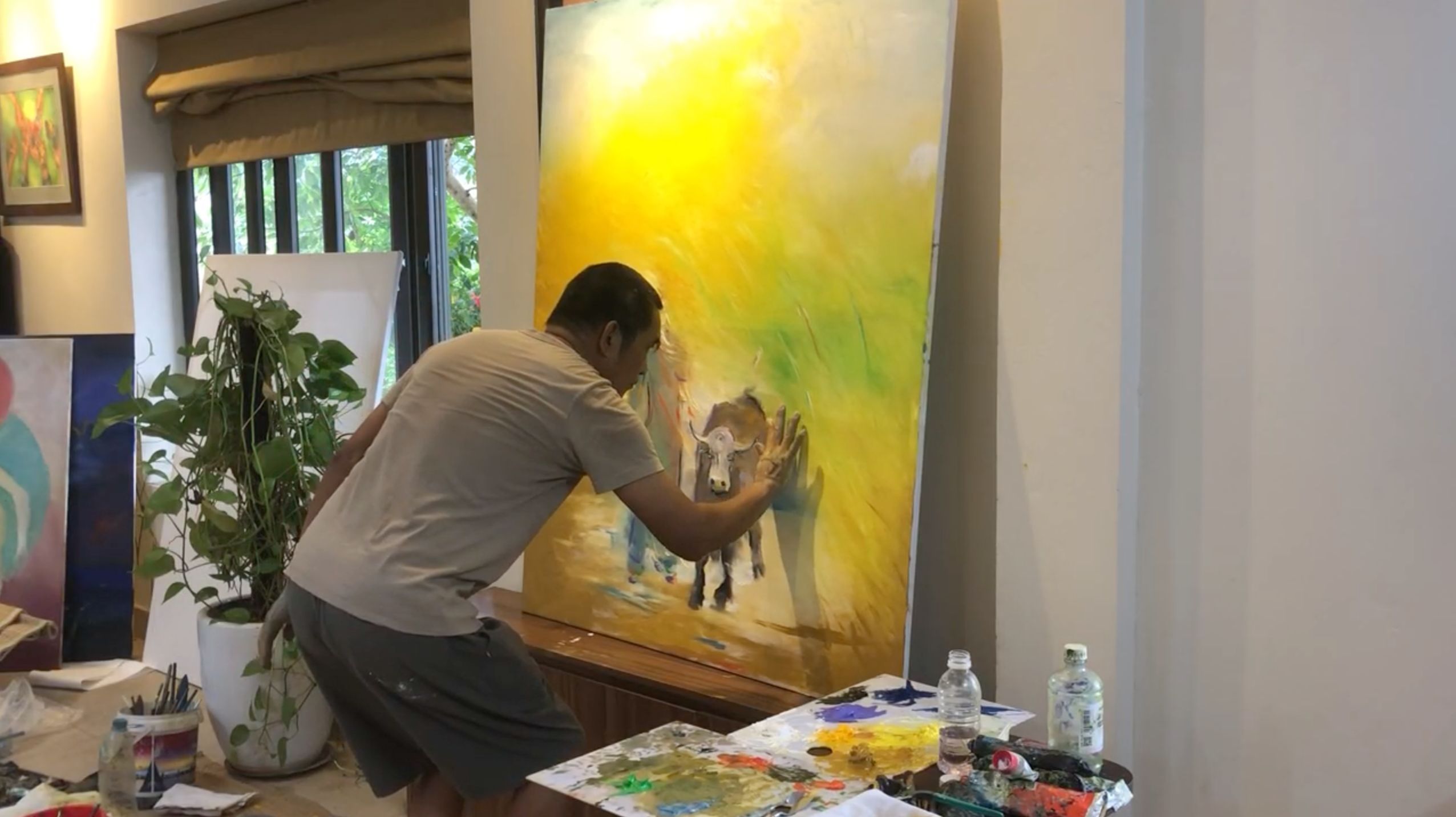
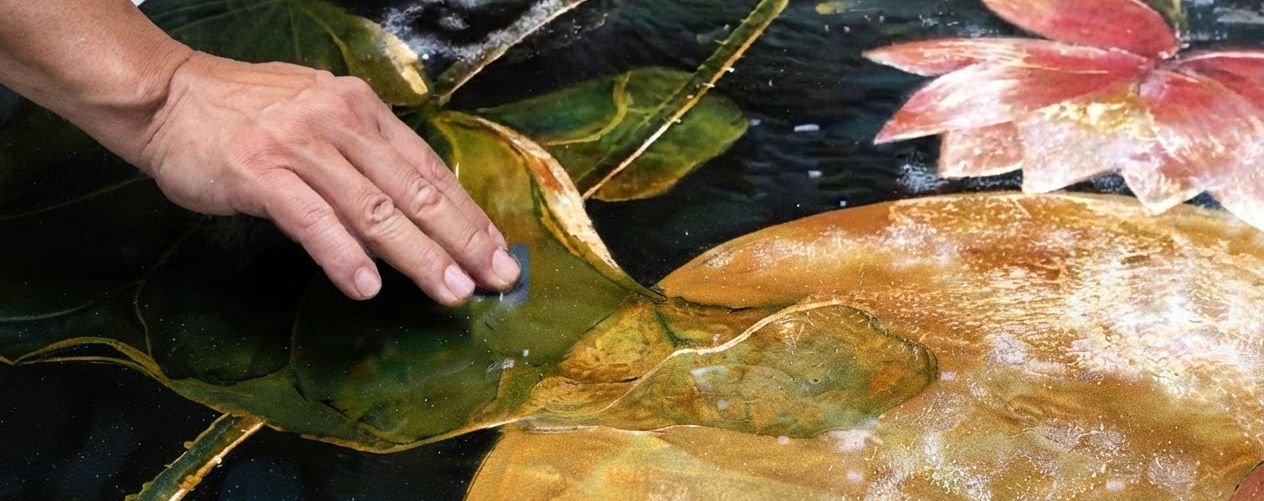
Building upon his intuitive approach to painting, Chân Như works directly on lacquer using all ten fingertips — a method without parallel in Vietnamese lacquer painting.
Permanence brings together works in oil and lacquer—two mediums with almost opposing creative rhythms.
While oil painting allows the artist to capture the immediacy of a moment, lacquer requires him to live with that moment for much longer. Building upon his intuitive approach to painting, Chân Như works directly on lacquer using all ten fingertips—without brushes, allowing his hands to come into direct contact with the material.
Each touch and sweep of the fingertips carries the rhythm of emotion, meditative energy, and immediate sensation directly into the lacquer. The greatest challenge of painting lacquer with the fingers is maintaining the continuation of that initial emotion throughout a process involving many complex stages. Every layer of lacquer, every round of polishing, every translucent layer, and every application of gold or silver leaf can introduce a new sensation. Yet this richness can also lead the work in many different directions if the original emotional impulse is not sustained from beginning to end.
The lacquer process therefore becomes, at the same time, a practice of concentration. The artist must sustain the emotion without allowing it to become scattered; he must remain open to new inspiration from the material without losing sight of the original direction. For Chân Như, this is also a form of meditative concentration—a steadiness of both emotion and awareness. Technique here becomes one with a state of mind. To create an image that endures, the artist must learn to move through time without losing the resonance of the moment from which the work first arose.
Ultimately, for Chân Như, what matters most is not the material itself, but resonance. A brick, a piece of wood, a fragment of cloth, or almost any other material can become a medium for art if the artist brings enough love, sensitivity, and skill to make it resonate.
This is also what makes the juxtaposition of oil and lacquer in Permanence particularly meaningful. The two mediums unfold according to very different rhythms of time, yet both move toward the same purpose: to convey the artist’s state of being and emotional resonance before the infinite—the beginningless and endless nature of the universe.
Within a relatively short period, Chân Như completed nearly 50 new Zen paintings in lacquer and oil. Together, these works extend the artistic journey he began exploring in his 2020 exhibition, Moments.
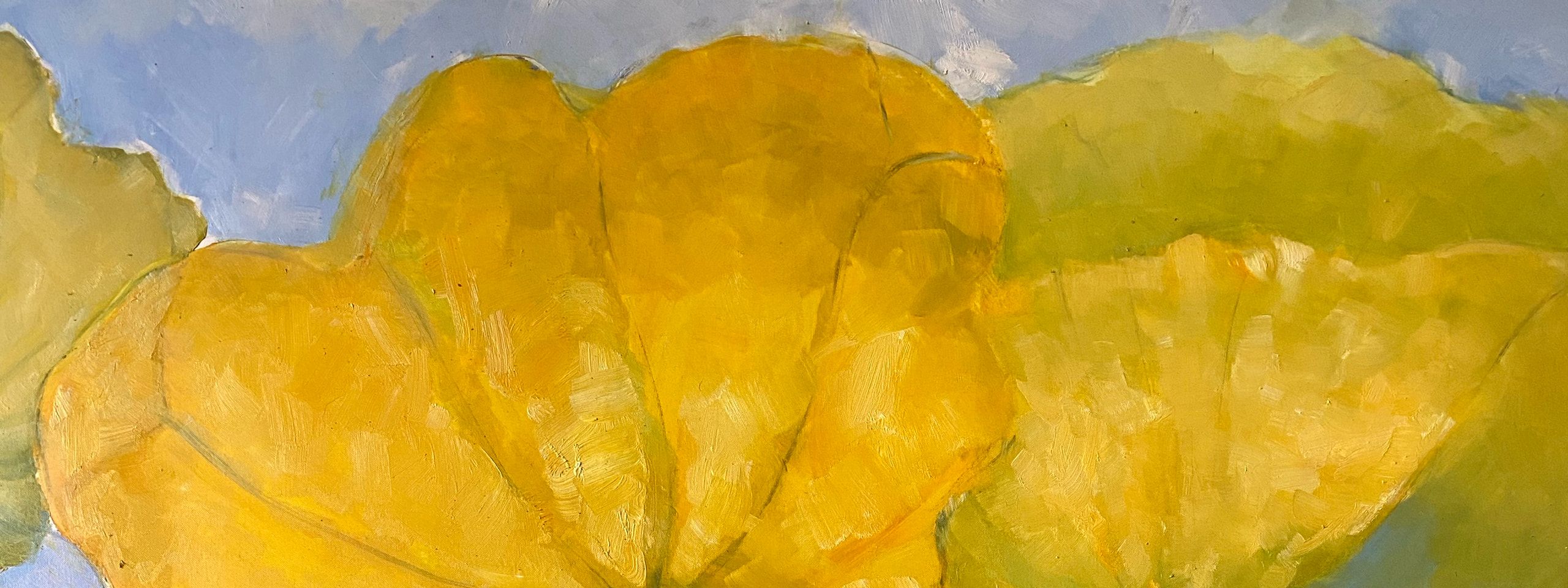
The Master and the Continuum
What is passed on is not simply technique or a way of working with materials, but also the Dharma — a way of seeing and receiving the world through the stillness of Zen practice.
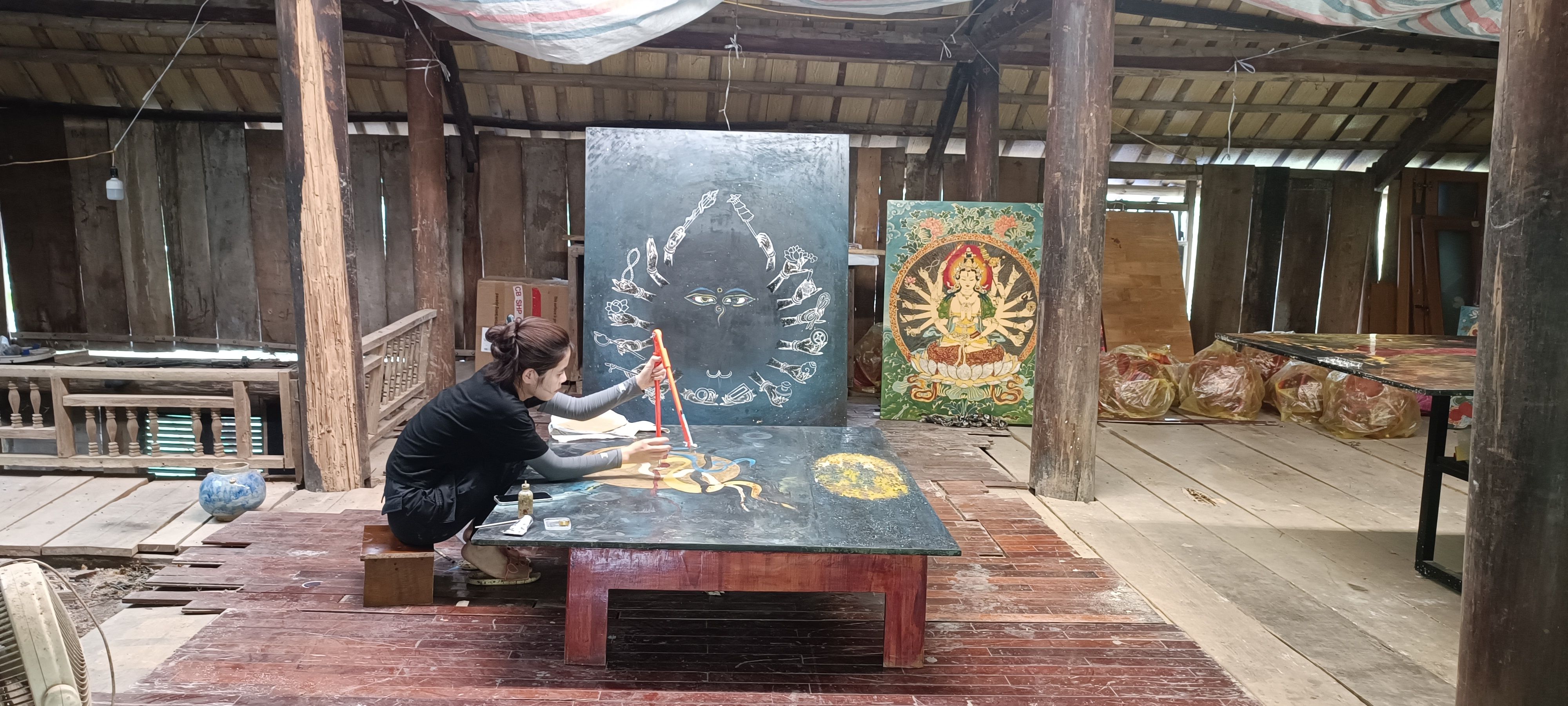
Alongside Chân Như’s works, Permanence also presents works by Định Tâm (Phan Nha Trang) and Lê Hồng Giang—two of his students who have followed different paths to art and to their practice with him.
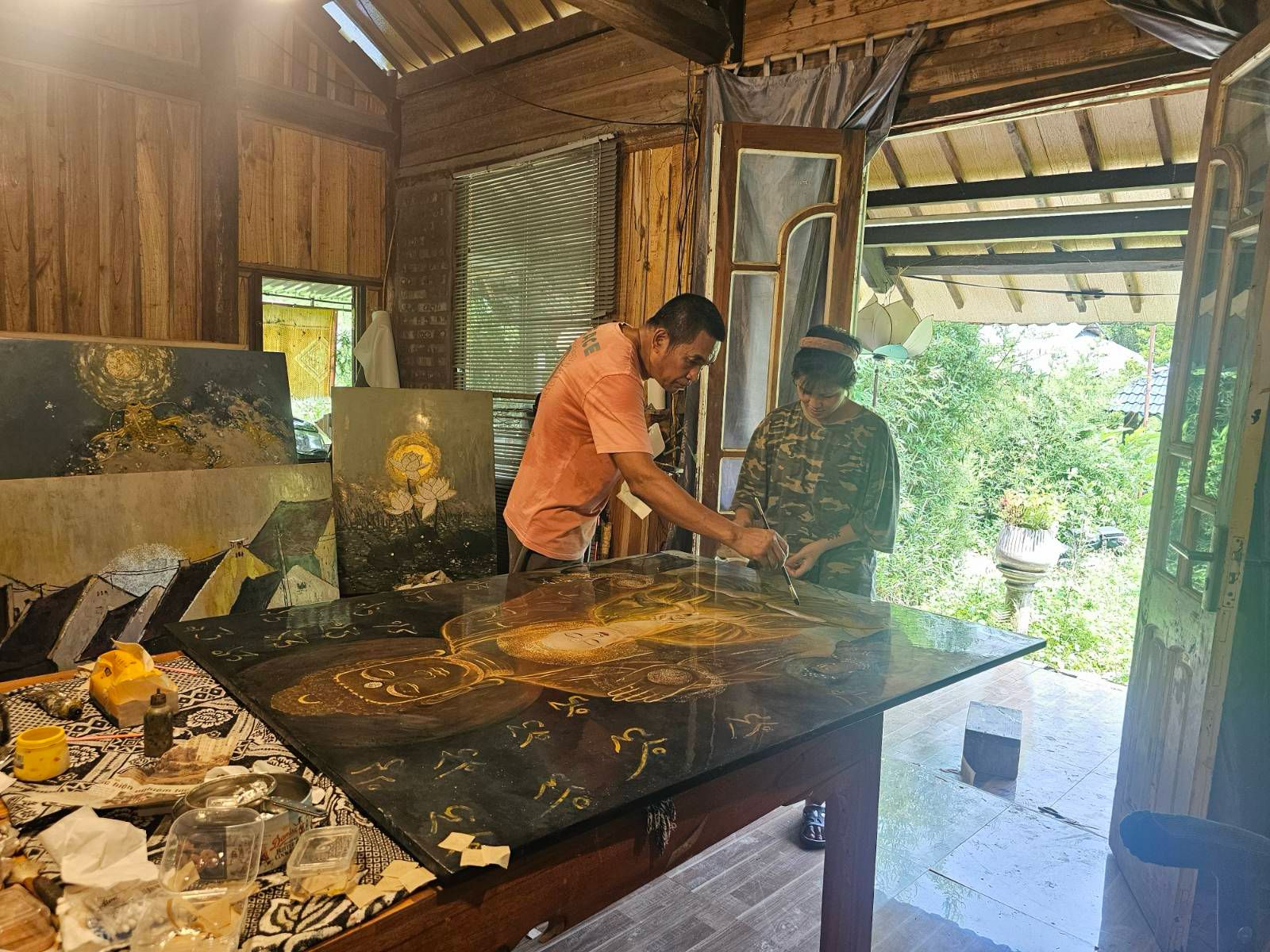
Their presence not only broadens the exhibition but also brings another dimension to the meaning of “permanence”: continuation.
If an artwork can be the trace of a moment, then art passed from one person to another creates a current that can extend beyond the life of any one individual. What is passed on is not simply technique or a way of working with materials, but also the Dharma—a way of seeing and receiving the world through the stillness of Zen practice.
In a world increasingly driven by speed, Permanence chooses a different rhythm: one of pausing, observing, feeling, and allowing an image gradually to emerge. It is also the rhythm of lacquer—a medium in which a work cannot be hurried—and of Zen painting, where what matters is not necessarily the depiction of a particular subject, but the state of the person who is looking.
Permanence, therefore, offers no definitive answer to what “the permanence” might be. Instead, it invites viewers into a space of stillness, where they can return to the question for themselves.
Everything seems to arise and pass away from moment to moment. But beyond this ceaseless flow, could there be something that has always remained?
With Permanence, the answer need not be found entirely on the surface of the paintings. Perhaps it lies in the stillness we create within ourselves as we stand before each work.
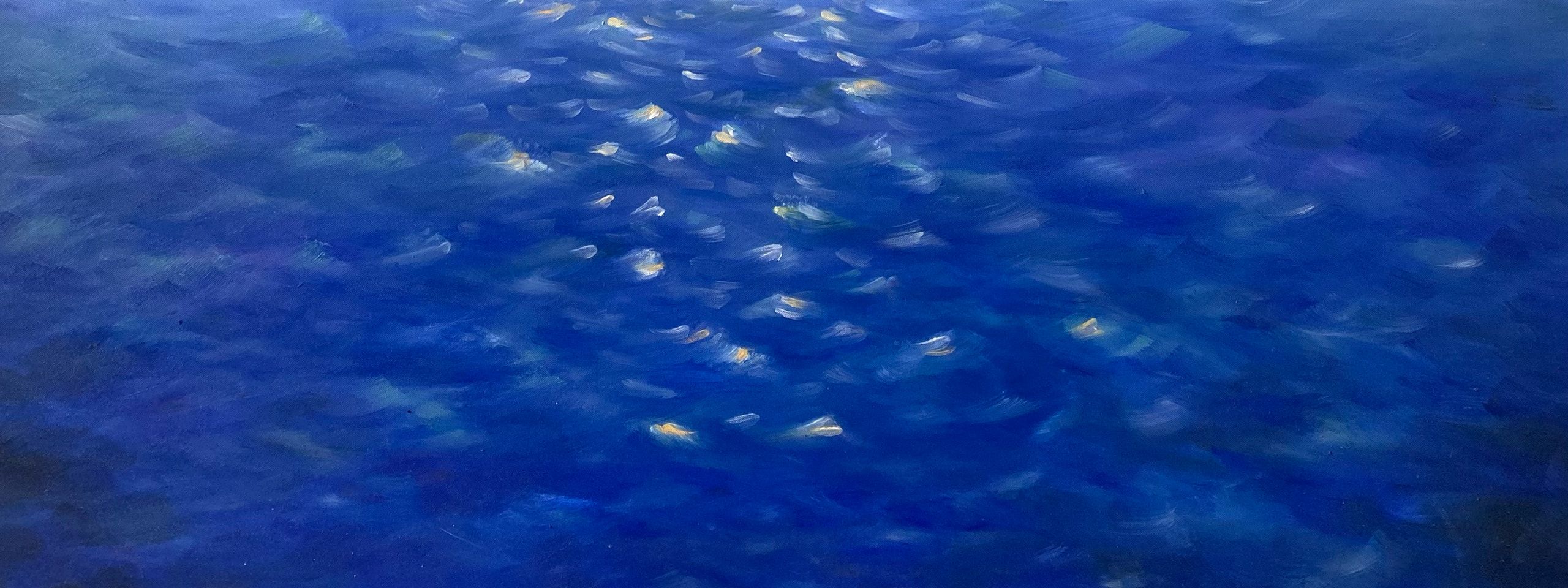
Works on show
A preview of the works
Visit “Permanence”
The exhibition is open until 26/09/2026 in Hà Nội. Admission is free.