Artists
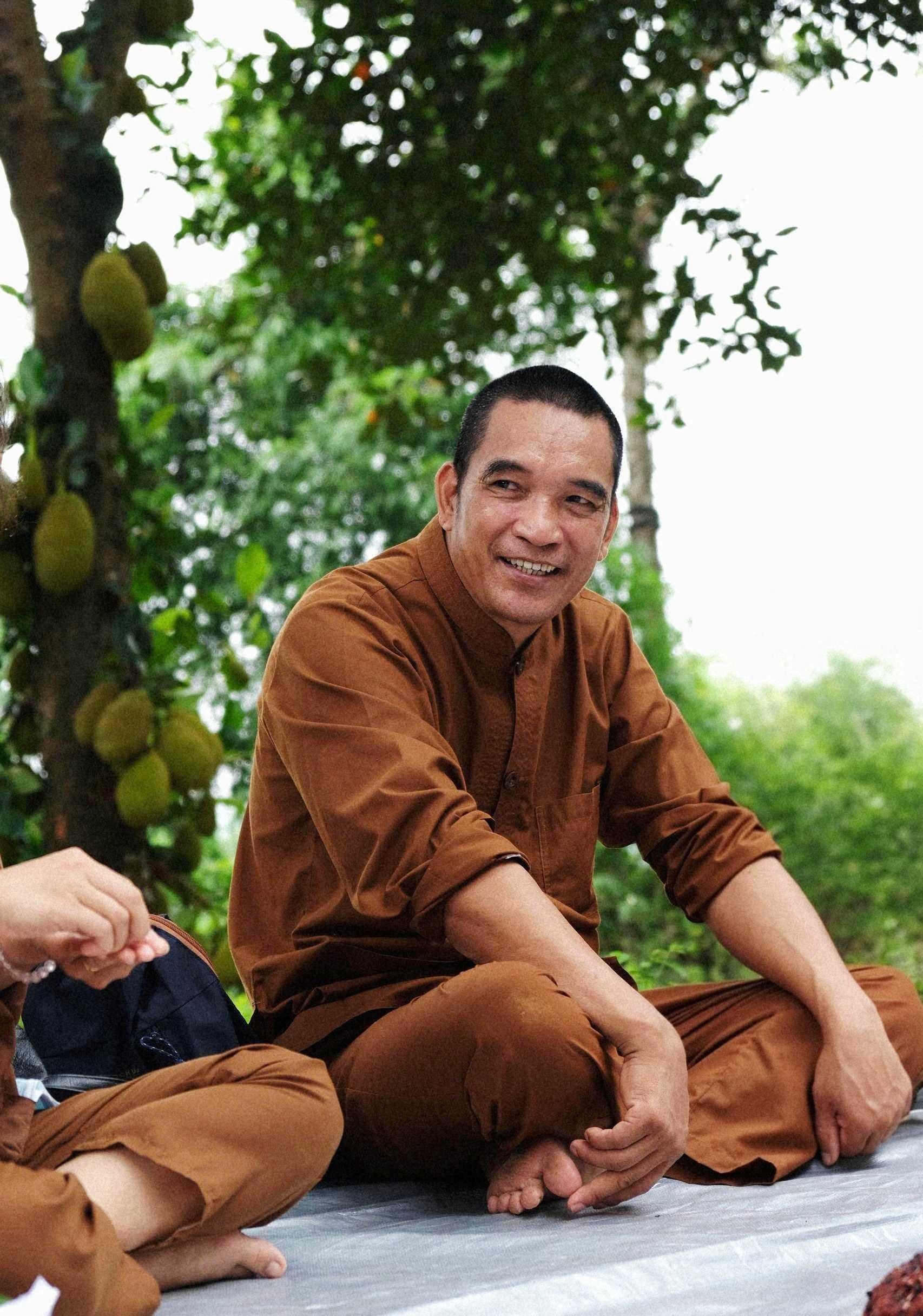
CHÂN NHƯ(LÊ MẠNH HÙNG)
For nearly two decades, Chân Như has devoted himself to Zen painting—an approach concerned less with reproducing the external world than with capturing subtle movements within, the artist’s resonance with life, and the transformations that arise through practice.
For him, a painting does not begin with a carefully calculated idea, but with stillness. Nor must it emerge from a predetermined composition; rather, it takes form through the artist’s complete presence in the act of painting.
To date, Chân Như has created more than 500 Zen paintings. Each captures a particular state of mind—a harmony between content and form, emotion and intuition—seeking to convey the essence of its subject with an energy that makes the work feel almost alive. Because each work is created directly with his fingertips in a moment that can never be repeated, every painting bears a singular and unrepeatable imprint.
The journey
A timeline of the work
Each exhibition marks not only a period of painting but a turn in Chân Như’s own practice. His Zen paintings are not only there to be looked at: they open a space for a conversation with the inner life, where a viewer can settle, feel, and come upon what is deepest in themselves.
Childhood
Beginnings
Chân Như’s journey into Zen painting began with a childhood love of art. Born and raised in Nam Định, he was already fascinated by drawing at the age of five or six.
From the 1980s
A passion sustained
That early fascination grew into an enduring passion, eventually leading him to the University of Industrial Fine Arts and later to a teaching position in fine arts at the School of Arts and Crafts under the Ministry of Construction.
An encounter with the Dharma
An unexpected assignment opened to him a different path. Asked to develop teaching materials on Vietnamese Buddhist sculpture, Chân Như began spending much of his free time visiting temples large and small throughout Hanoi, observing and studying their Buddhist statuary.
These visits gradually deepened his interest in Buddhist art and led him toward more profound questions about the inner life. The idea of Zen painting began to take shape. Since then, alongside his continuing study of painting, he has explored different traditions of meditation and developed his own meditation practice, gradually discovering a harmony between meditation and artistic expression.
2006
— The Soul of the Vietnamese Countryside, Group Exhibition, Hanoi
The exhibition that marked the beginning of his distinctive artistic path, where painting and meditation came together as one practice.
2008
— Time to Return, Solo Zen Art Exhibition, Hanoi
After a period of deep change in his study and practice of the Dharma, he mounted Time to Return. The title means a return to oneself: setting down the shells of the ego to recognise the true person already present in everyone.
2011
— The Waiting Wharf, Solo Zen Art Exhibition, Hanoi
A new chapter in the artist’s journey. These paintings carry a longing for awakening, an invitation to step aboard the boat of wisdom and compassion, to cross the wharf of delusion toward the far shore and its peace.
2013
— Homeland, Group Exhibition, Hanoi and Quảng Bình
A group exhibition with painter Đỗ Viết Viên and fellow artists, held in Hanoi and Quang Binh. The exhibition brought together a shared love for the many regions of Vietnam and paying tribute to those who gave their lives for the country.
2015
— Lotus – Father and Son, Solo Zen Art Exhibition, Hanoi
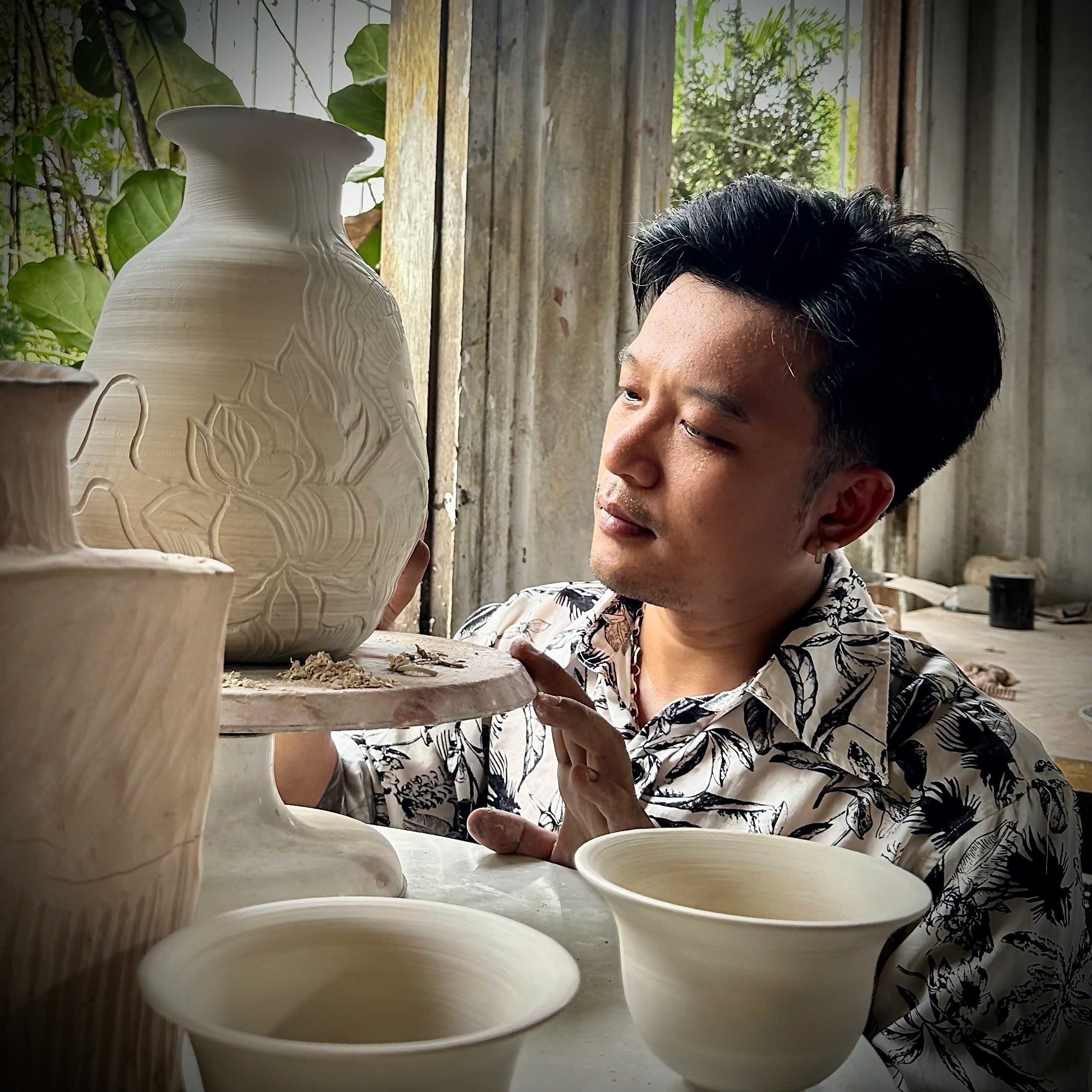
A special milestone in Lê Mạnh Hùng’s artistic journey: his first exhibition together with his son.
The title reaches beyond the lotus itself—the emblem of purity and of waking—to the continuation of a love of art, of the values one lives by, and of the long work of tending a mind.
2020
— Moments, Solo Zen Art Exhibition, Hanoi
Each work holds on to a moment of the present—the mind resting wholly in what is happening now. Through open fields of colour and unhurried line, the painter suggests that the real beauty of a life is present in every moment, for anyone willing to stop, to look, and to feel with a quiet mind.
September 2026
Permanence — forthcoming
Where Moments turned its gaze on what is happening in one brief point of time, Permanence opens the question from the other end: after the moments that keep changing, what remains?
What sets the work apart
Painting in a meditative state
Painted directly by hand
He paints directly with all ten fingertips, across a range of materials, among them oil and lacquer — no brushes.
No preliminary sketch
Without conventional compositional planning, each movement of the hands and each application of colour becomes part of a natural flow of emotion and intuition.
Finished in 30 to 90 minutes
Yet behind those brief moments lie years of practice, observation, contemplation, and personal transformation.
His students
A current passed on
If a work is the trace of a single moment, then art passing from one person to another makes a current that outlasts any one life. What travels along it is not only technique or the handling of a material, but the Dharma — a way of looking at the world, and of receiving it, in the stillness of Zen painting.